|
View this Newsletter Online |
|
|
|

|
June 2026 |
|

|
President's Message |
|

|
I hope everyone is finding a chance to enjoy the start of summer. I also hope you are managing to pull yourselves out of your labs and offices every now and then to enjoy some of the long, sunny days that this time of year brings. As usual, science policy has not given us much of a summer break. A new proposed rule from OMB could significantly change how federal grants are reviewed, managed, and even terminated, with implications for everything from publication costs and conference travel to international collaborations and the overall stability of awarded projects. This is another reminder that the research environment remains uncertain, and that decisions far outside of our labs can have very real effects on how we do our work. Mitzy has provided more details below, and I encourage you to take a look. |
|
Even with that uncertainty, NAVBO members have always found ways to keep the science moving forward while also supporting one another through the inevitable challenges that come with research careers. As we move deeper into summer, I hope you will find a little time to recharge, enjoy time with family and friends, and maybe even step away from your inbox for a few hours. I wish all of you a productive and restorative summer, and I look forward to seeing the good work that continues to come from this community. Best regards, Wayne Orr, PhD President, NAVBO |
|
Callf or Nominations |
|
|
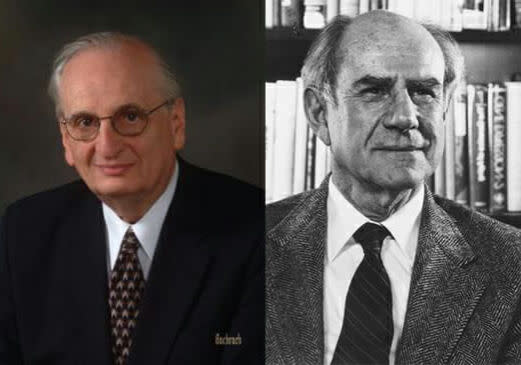
We are seeking nominations from the membership for the 2027 Earl P. Benditt Award and Judah Folkman Award in Vascular Biology, which will be presented at Vascular Biology 2027.
Nominations are due July 15, 2026. See the web site for more details. |
|
Impacts and Implications of the OMB Rule |
|
Last week, the Office of Management and Budget (OMB) introduced a proposed rule that could significantly alter the federal grant-making process. These rules affect funding across the federal government, including grants from the NIH, NSF, CDC, and others.
Potential impacts to NAVBO members include: Political review of discretionary grants New restrictions on international research collaborations Expanded authority to terminate grants Requiring pre-approval for scientific conferences Prohibiting the use of federal funds for journal publication costs
Comments are due July 13 at 11:59 p.m. Eastern Time and the rule is scheduled to take effect on October 1, 2026. Once the rule is implemented, it has the force of law.
NAVBO has implemented a task force in response to this deadline and will be providing further guidance on what our members can do in the coming weeks. We will provide you with information and tools via the Vascular Network Community and emails. If you receive helpful information from other societies, please post it to the community (https://navbo.junolive.com) and/or email mitzy@navbo.org. |
|
Spotlight on Trainees |
|
Critical questions on AI and preparing the workforce of the future A new article from the US National Academies dissects the outcome of the Academies’ “Action Collaborative on Education and Workforce Trajectories in Tech” event. This workshop dissected potential impacts of AI on education, jobs, and the factors trainees now must consider in the interest of their prospects for future employability. The event gathered participants from education, industry, and philanthropy to explore how AI is affecting education and jobs in and beyond tech — and how organizations can collaborate to steer those impacts. |
|
NAVBO 2026 Meetings |
|

|
July 7-10, 2026 Limited space...Register soon! |
|

|
October 18-22, 2026 Super Early Bird Discount ends June 30 |
|
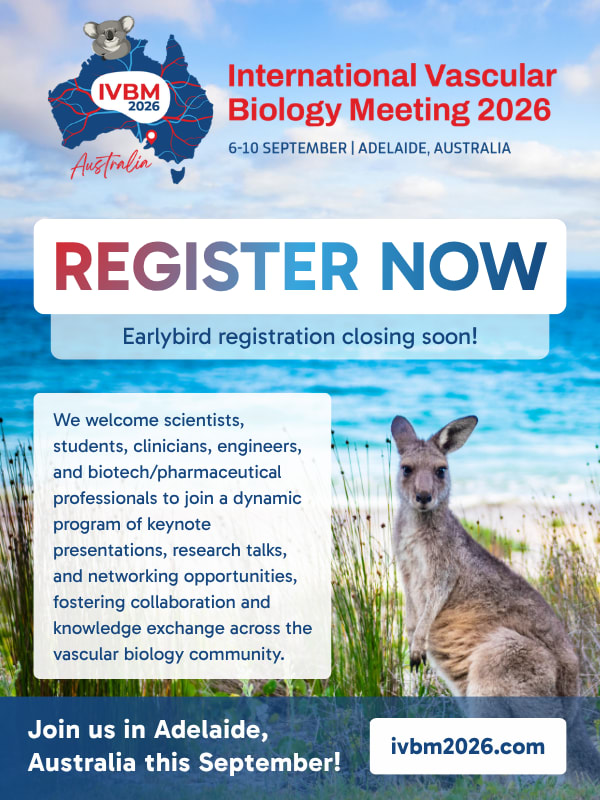
IVBM2026 - Register Now! |
|
|
Did You Know . . . |
|

|
Vascular Network Posting Competition Results |
|

|
Congratulations to Professor Lian-Wang Guo, University of Virginia, winner of the Vascular Network’s April Posting Competition! You have won a mug!
Stay tuned for the Vascular Network’s next posting competition – and another chance to win some awesome swag.
Can't wait for the next competition, shop NAVBO now.. |
|
Member News |
|
Welcome to our New Members: Cassandra Atzrodt, Vanderbilt University Tanya Cruz, University of Virginia Yuling Deng, Washington University in St. Louis Fabeha Fazal, University of Rochester Abagael Hudak, University of Ottawa Kaska Koltowska, Uppsala University Fathima Lynch, University of Rochester Kaylee Montanari, University of Pittsburgh Dibyanti Mukherjee, University of California, San Francisco Stefan Pietrzak, Medical College of Wisconsin Chanele Polenz, University of Ottawa Heart Institute Thomas Resta, University of New Mexico Arpita Roy, Stanford University Julie Sneddon, University of California, San Francisco Katherine Tang, Duke University Thirujhan Theivendram, University of Toronto Zhiqing Wang, Washington University in St. Louis Claudia Wong, Duke University Andrew Yan, Yale University Ying Yang, Northwestern University Feinberg School of Medicine Timur Yarovinsky, Yale University Lola Zerbib, NIH |
|
Recent Member Publications |
|
A Borophosphate Glass Doped with Cobalt Oxide Improves Skeletal Muscle Structure and Function in Myopathic Mice Skeletal muscle myopathy remains a significant cause of disability with limited treatment strategies. Advancements in tissue engineering have led to the development of borophosphate bioactive glasses (BPBGs) capable of enhancing skeletal muscle structure and function. Read More
Guidelines for evaluating endothelial function in vascular tissue The endothelium plays a central role in maintaining vascular homeostasis by orchestrating vascular tone, inflammation, healing, permeability, and thrombosis. Assessing endothelial function in vascular tissue is essential for understanding the cellular and molecular mechanisms underlying cardiovascular physiology and pathology. Read More
Adipose Triglyceride Lipase and Gpr40 Contribute to the Anti-Contractile Effect of Perivascular Adipose Tissue Perivascular adipose tissue (PVAT) surrounds most peripheral blood vessels and exerts an anti-contractile influence through paracrine mediators. Although numerous vasoactive factors have been identified, the mechanisms linking adipocyte metabolism to PVAT-dependent modulation of vascular tone remain poorly defined. Read More
Hypertension-induced retinal microvascular remodeling in women Background: Hypertension is a major risk factor for cardiovascular disease, yet its effects on the retinal microvasculature in women, independent of pregnancy and diabetes, remain poorly understood. Methods: We integrated retinal imaging in female participants with structural assessments in hypertensive female mice to evaluate retinal microvascular remodeling. Read More
Dopamine D2 Receptor Agonists as Modulators of VEGF-A-Driven Angiogenesis: Mechanisms, Clinical Evidence, and Translational Opportunities Angiogenesis mediated by vascular endothelial growth factor A (VEGF-A) is essential for physiological vascular remodeling but also drives pathological processes, including tumor growth, ocular neovascularization, and inflammation. Read More
ERG is a regulator of dynamic and reversible endothelial plasticity Background: Endothelial cells (ECs) orchestrate vascular homeostasis and resilience but can undergo reprogramming into a mesenchymal-like phenotype through an endothelial-to-mesenchymal transition (EndMT). Crucially, EndMT is a linchpin underlying several cardiometabolic diseases, but is almost universally studied as an endpoint. Read More
KRAS-dependent glycolytic reprogramming of endothelial cells in sporadic arteriovenous malformations Somatic activating KRAS mutations in endothelial cells are the predominant cause of sporadic brain arteriovenous malformations (bAVMs) and also occur in sporadic extracranial AVMs. We found that KRASG12V expression in the endothelium increased angiogenesis, which was accompanied by enhanced glucose uptake and glycolytic flux. Read More
If you recently published a paper and would like to have it included in a future issue of the NAVBO NewsBEAT and/or on our web site. Please send the citation to membership@navbo.org |
|
Industry News |
|
The value of federal investment in conference travel and society membership The American Physiological Society is gathering information to inform a collective response to a proposed federal rule that would restrict how researchers use grant funds, including conference attendance and professional memberships. Responses are invited to a question about how federal grantees use sponsor-provided funds to underwrite participation in scientific meetings and professional organization membership. Your response will help the APS document how these and other proposed changes would affect the life science community.
Prospects for Artificial Intelligence in healthcare Scientific publisher Wolters Kluwer has released its 2026 Future Ready Healthcare Report, titled “Patients, doctors, and nurses on AI: Same tools, different pathways, one destination.” The report explores how patients and clinicians are engaging with Artificial Intelligence and how health systems can ensure that AI utilization ultimately leads to more efficient, effective, coordinated, and patient-focused care.
NIH initiative on New Approach Methodologies While selection of biologically appropriate experimental models has always been crucial enhance human relevance and translational potential of research findings, the NIH has brought special focus on experimental frameworks. A recent release from the NIH Extramural Nexus encourages consideration of so-called New Approach Methodologies, such as human-based in vitro systems, computational models, and real-world data either alone or in combination with other models, including laboratory animals. |
|
Call for Papers |
|
|
Frontiers In Cardiovascular Medicine A NAVBO sponsored Research Topic |
|
This Research Topic aims to highlight advances spanning the full continuum of atherosclerosis research, from fundamental science through translational research to clinical implementation. Areas of particular interest include novel molecular mechanisms, new therapeutic targets, and the use of single-cell and spatial technologies to dissect vascular and immune cell heterogeneity. We also welcome studies exploring epigenetic and non-coding RNA regulation, the roles of systemic metabolism and the gut microbiome, as well as sex-specific mechanisms in vascular disease. Click here for more information. Manuscript Submission Deadline 29 September 2026 |
|
|
|
Frontiers In Cardiovascular Medicine A NAVBO sponsored Research Topic
The complexity of signaling pathways and post‑translational modifications has expanded dramatically, yet translating these advances into cardiovascular medicine remains difficult due to chronic disease dynamics, resistance, and the overlapping nature of regulatory networks. Integrating AI‑driven modeling and machine learning offers a promising way to decode complex networks and inspire transformative directions for future research and clinical innovation. Therefore, this Research Topic is designed to provide a dedicated platform for transformative thinking, welcoming submissions that push boundaries and offer fresh perspectives on signaling and post-translational modification in health and disease. For more information, click here. Manuscript Submission Deadline 5 July 2026 |
|
|
|

|
Frontiers In Cardiovascular Medicine Advances in Vascular Malformations: From Molecular and Cellular Mechanisms to Clinical Therapies and Management
In this Research Topic, we aim to gather contributions from scientists and clinicians to share recent advances in our understanding of the biology and treatment of vascular malformations. Ultimately, our goal is to accelerate the development of new therapeutic treatments for patients with vascular malformations affecting blood or lymphatic vessels.
Specific areas of interest are listed on the webpage: The deadline for manuscript submission is June 14, 2026. Header image credit: Dr. Elisa Boscolo |
|
|
|
Frontiers In Cardiovascular Medicine A NAVBO sponsored Research Topic
Specific areas of interest are listed on the webpage The deadline for manuscript submission is September 29, 2026. |
|
|
|
|
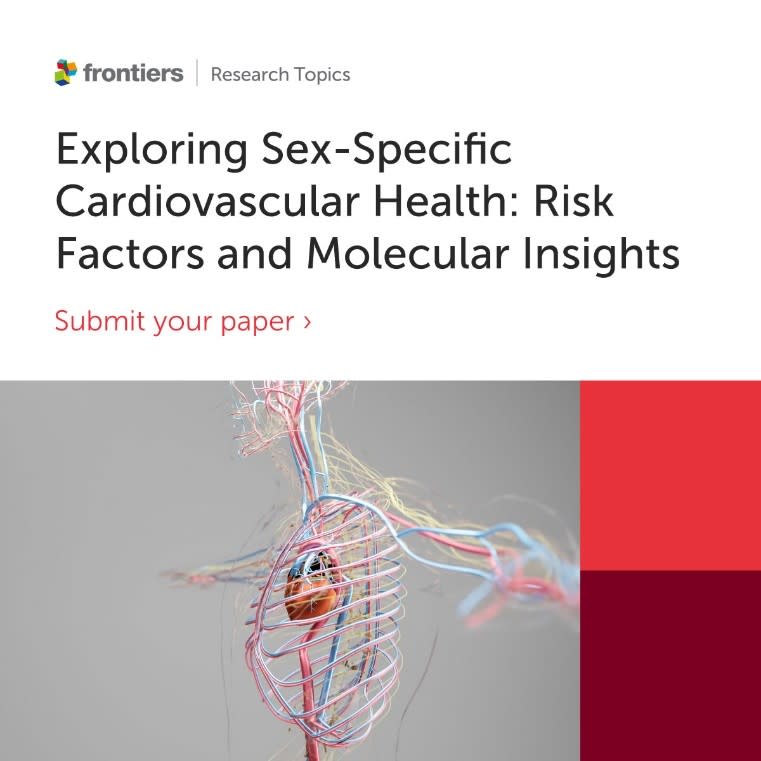
This collection focuses on the biochemical determinants and risk factors that contribute to the sex differences in cardiovascular disease initiation, development, presentation, and diagnosis. Specific areas of interest include coronary disease, microvascular dysfunction, hormonal and non-hormonal mechanisms of sex-related cardio protection, vascular biomechanics, and impacts of gender (as distinct from biological sex) and related lifestyle on cardiovascular health. The topic editors are Drs. Irena Levitan, University of Illinois Chicago, Catherine Martel, Universite de Montreal, and Benard Ogola, Augusta University. Frontiers | Exploring Sex-Specific Cardiovascular Health: Risk Factors and Molecular Insights. |
|
NAVBO Corporate Partners |
|

|

|

|

|

|

|
NAVBO Corporate Member |
|
|
Calendar of Events |
|
|
Job Postings |
|
Have an open position that you would like to see listed here? NAVBO members receive deep discounts on their posts. Submit your open position today! |
|
|
|


|
North American Vascular Biology Organization |